
Circular Economy from Waste to Wealth: Sustainable Human Development Evidence in Nigeria
Sylvester Onyeoma
Listen to the introduction
Abstract
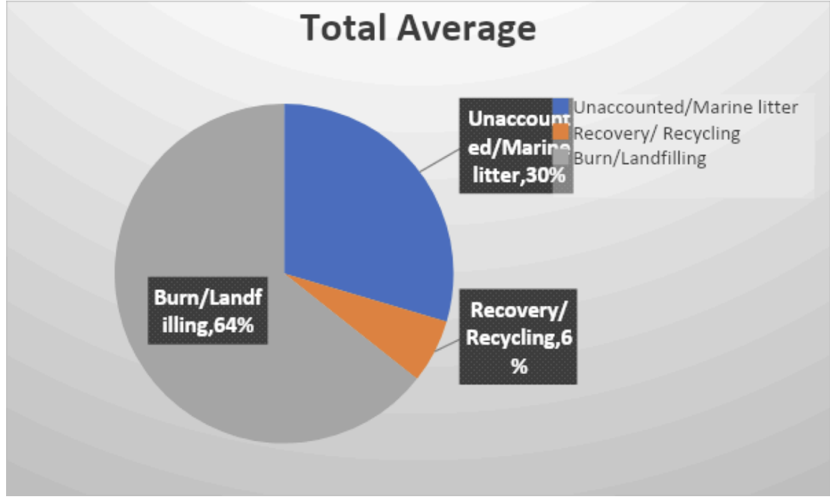
The problem of waste disposal constitutes serious environmental challenges facing many cities and there is still a phenomenal increase in the volume of wastes generated daily across the globe. This study on circular economy from waste to wealth employs a mixed-methods approach to comprehensively analyze waste-to-wealth initiatives in Nigeria, focusing on various wastes management feats to generate wealth and solve environmental problems. Utilizing secondary data, the methodology aims to provide good understanding of the economic, social, and environmental dimensions of these initiatives. Qualitative data from literature reviews and document analyses identify key themes, while quantitative data on waste generation, recycling rates, and economic outcomes underwent descriptive statistical analysis for key indicators. The results highlight Nigeria's significant plastic waste generation, with only 6% being recycled. The study reveals untapped potential in the recycling industry and showcases successful models, such as Wecyclers and Recycle Points. The findings suggest that with policy interventions and economic incentives, Nigeria could achieve a 70% recycling rate, offering substantial investment scalability and greenhouse gas savings. Additionally, the study emphasizes the positive correlation between the growth of private sector participants in waste management and increased job opportunities, indicating a potential positive impact on the economy and employment landscape.
 BRJ now supports Model Context Protocol
 ChatGPT
 Claude
 Gemini
Research ID
Universal Unique Research ID
Citation Generator
Cite This Research Manuscript
Onyeoma, S. (2024). Circular Economy from Waste to Wealth: Sustainable Human Development Evidence in Nigeria. Boston Research Journal of Social Sciences & Humanities, 4(2), 33-48. https://doi.org/10.63942/brjssh.v4.i2.p33.25197
Figures
References
Adetola, O. B., Odunlami, D., Fasanmi, S. A., Yinusa, G. O., Adedeji, I. A., Solaja, M. O., Popoola, D., Ogede, S., Ogunbote, O., & Sunmola, B. (2021). Waste to wealth perspective: Identifying waste potentials for small scale business development in Ogun State, Nigeria. *Journal of Humanities, 5*.
Akuru, U. B., & Okoro, O. I. (2019). Electronic wastes and the Nigerian experience. In *Conference proceedings of the Nigerian Institution of Electrical and Electronic Engineers*.
Anabaraonye, B., Okafor, C. J., Hope, J., & Eriobu, C. M. (2019). The health and economic impacts of waste recycling for sustainability in Nigeria. In *3rd Covenant University International Conference on Entrepreneurship (CU-ICE)*.
Federal Ministry of Environment. (2020, January). *National policy on plastic waste management*.
Hammer, J., Kraak, M. H. S., & Parsons, J. R. (2012). Plastics in the marine environment: The dark side of a modern gift. *Reviews of Environmental Contamination and Toxicology, 220*, 1–44. [https://doi.org/10.1007/978-1-4614-3414-6\_1](https://doi.org/10.1007/978-1-4614-3414-6_1)
International Data Corporation. (2012, February 6). *Android and iOS combine for 85 percent of the worldwide smartphone market in 4Q11 and 82 percent for the year, according to IDC*. [https://www.idc.com/getdoc.jsp?containerId=prUS23299912](https://www.google.com/search?q=https://www.idc.com/getdoc.jsp%3FcontainerId%3DprUS23299912)
International Labour Organization. (2019). *From waste to jobs: Decent work challenges and opportunities in the management of e-waste in Nigeria* (Working Paper No. 322).
International Telecommunication Union. (2017). *Overview of trust provisioning in information and communication technology infrastructures and services* (Recommendation ITU-T Y.3052). [https://www.itu.int/rec/T-REC-Y.3052-201703-I/en](https://www.google.com/search?q=https://www.itu.int/rec/T-REC-Y.3052-201703-I/en)
Kaza, S., Yao, L. C., Bhada-Tata, P., & Van Woerden, F. (2018). *What a waste 2.0: A global snapshot of solid waste management to 2050*. World Bank. [https://openknowledge.worldbank.org/handle/10986/30317](https://openknowledge.worldbank.org/handle/10986/30317)
Nwabuisi, S. O., & Ihenetu, S. C. (2022). State of plastic pollution in Nigeria and measures to tackle them: A review. *Journal of Industrial Pollution Control, 38*(5), 1–6.
Ogungbuyi, T., & Akitunde, S. (2012). *E-waste country assessment Nigeria*. Secretariat of the Basel Convention and Empa. [http://www.basel.int/Portals/4/Basel%20Convention/docs/eWaste/EwasteAfrica\_Nigeria-Assessment.pdf](http://www.basel.int/Portals/4/Basel%20Convention/docs/eWaste/EwasteAfrica_Nigeria-Assessment.pdf)
Okeke, C. C. (2018, February 14). Nigeria gets first e-waste recycling facility. *Daily Trust*.
Oluwadare, J. O. (2021). Need-driven research towards plastic recycling in Nigeria for health, wealth and green environment. *The Journal of Macro-trends in Applied Science, 9*(11), 1–10.
Oranefo, P. C. (2022). Effect of waste recycling on business profitability of Nigeria SMEs. *African Journal of Business and Economic Development, 2*(12).
Osibanjo, O. (2015). *Gender and e-waste management in Africa*. Basel Convention Coordinating Centre for the African Region.
PwC. (2019). *Market assessment for plastics circularity in Nigeria* [Draft report].
Schluep, M., Hagelueken, C., Kuehr, R., Magalini, F., Maurer, C., Meskers, C., Mueller, E., & Wang, F. (2009). *Recycling - from e-waste to resources*. United Nations Environment Programme & United Nations University.
Schluep, M., et al. (2020). *Scoping mission waste and circular economy to Lagos, Nigeria*. Holland Circular Hotspot. [https://hollandcircularhotspot.nl/wp-content/uploads/2020/05/Nigeria-Scoping-Mission-Waste-and-CE-Report-RVO.pdf](https://hollandcircularhotspot.nl/wp-content/uploads/2020/05/Nigeria-Scoping-Mission-Waste-and-CE-Report-RVO.pdf)
Singh, P., & Sharma, V. P. (2016). Integrated plastic waste management: Environmental and improved health approaches. *Procedia Environmental Sciences, 35*, 692–700. [https://doi.org/10.1016/j.proenv.2016.07.068](https://doi.org/10.1016/j.proenv.2016.07.068)
United States Geological Survey. (2001). *Obsolete computer, “gold mine” or high-tech trash?* (Fact Sheet 060-01). U.S. Department of the Interior.
Widmer, R., Oswald-Krapf, H., Sinha-Khetriwal, D., Schnellmann, M., & Böni, H. (2005). Global perspectives on e-waste. *Environmental Impact Assessment Review, 25*(5), 436–458. [https://doi.org/10.1016/j.eiar.2005.04.001](https://doi.org/10.1016/j.eiar.2005.04.001)
Copyright
© 2024 Onyeoma. This is an open-access article distributed under the terms of the Creative Commons Attribution License (CC BY 4.0). The use, distribution or reproduction in other forums is permitted, provided the original author(s) or licensor are credited and that the original publication in this journal is cited, in accordance with accepted academic practice. No use, distribution or reproduction is permitted which does not comply with these terms.
Journal compilation © 2026 Boston Research Journals.
*Correspondence: Sylvester Onyeoma
Disclaimer
All claims expressed in this article are solely those of the authors and do not necessarily represent those of their affiliated organizations, or those of the publisher, the editors and the reviewers. Any product that may be evaluated in this article or claim that may be made by its manufacturer is not guaranteed or endorsed by the publisher.