

Dialect Diversity in Eve and Its Impact on the Lexical Sets: Nurse, Dress and Letter
Dr. Lena Awoonor
Listen to the introduction
Abstract
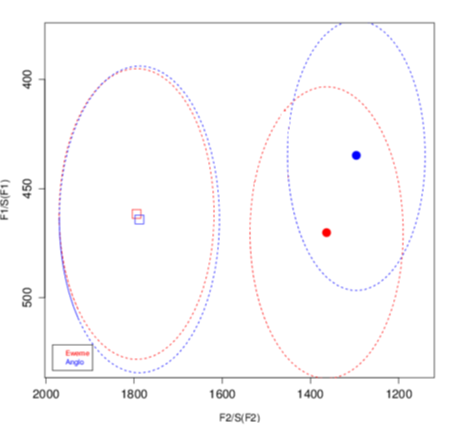
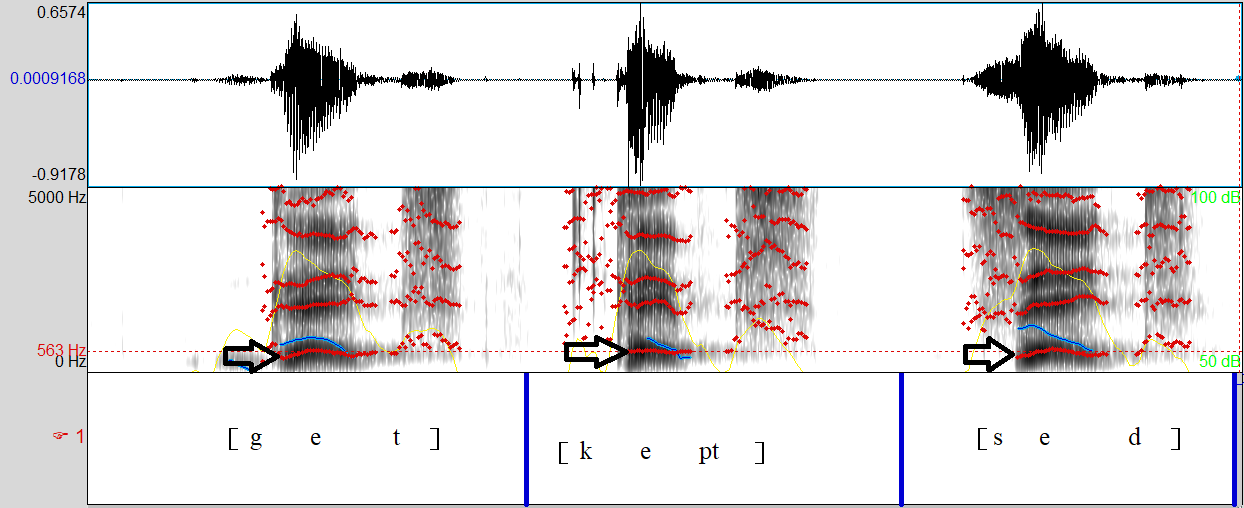
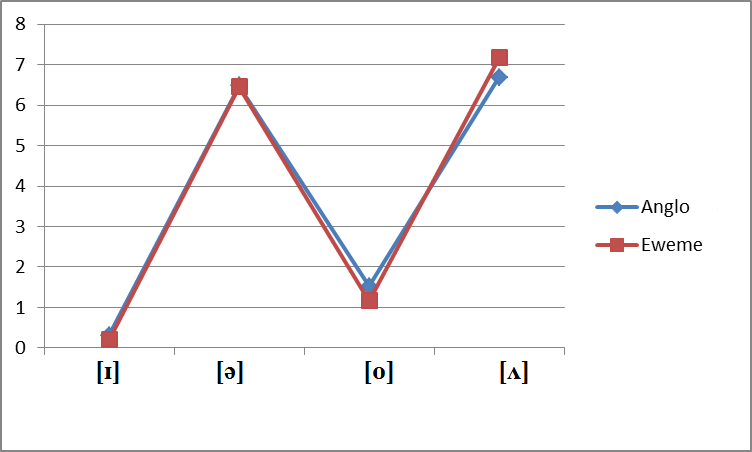
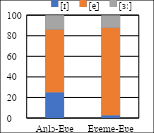
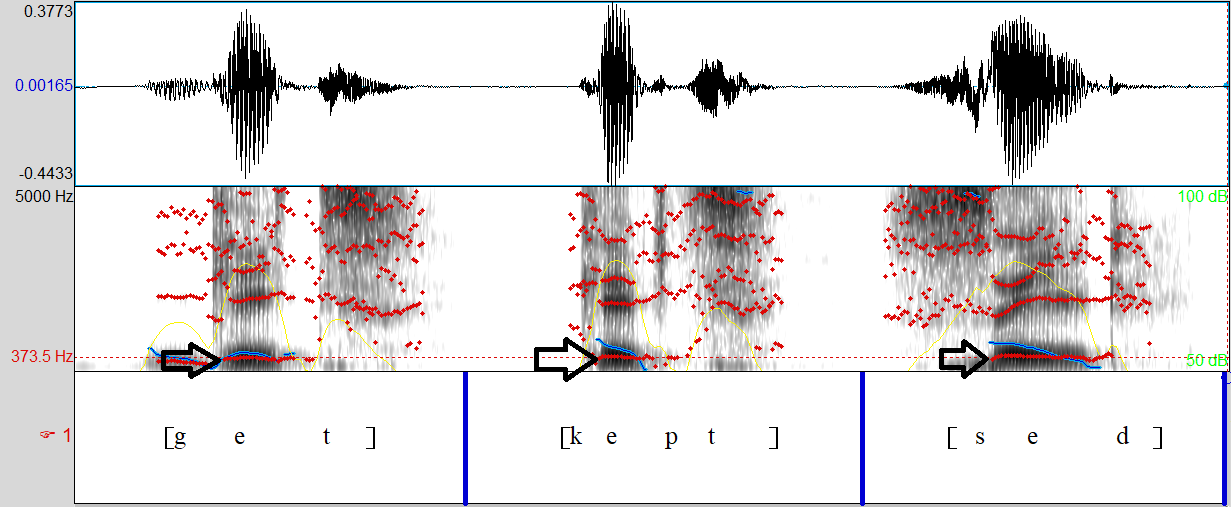
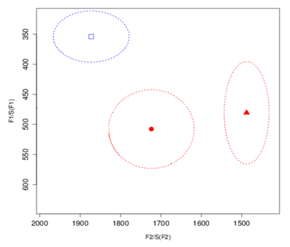
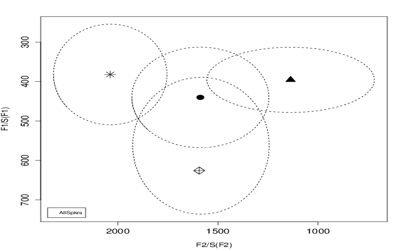
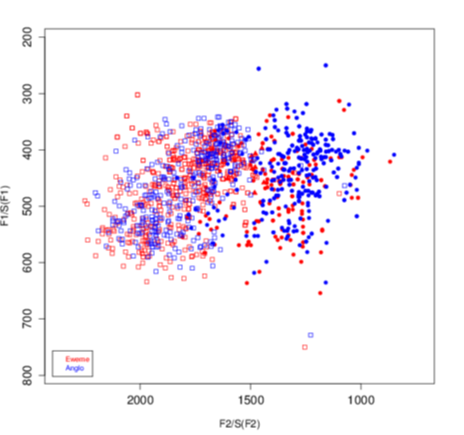
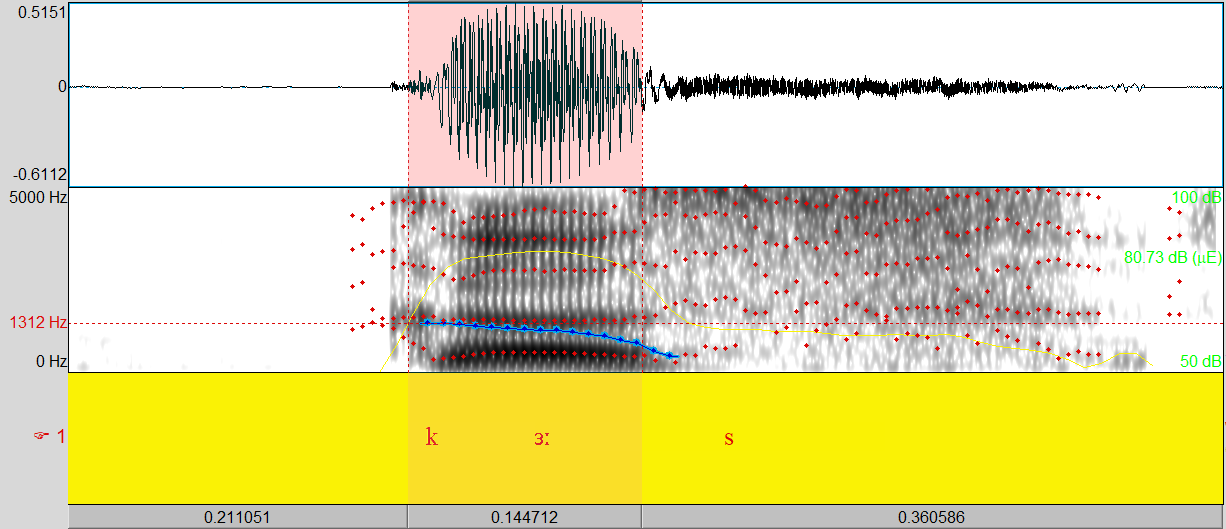
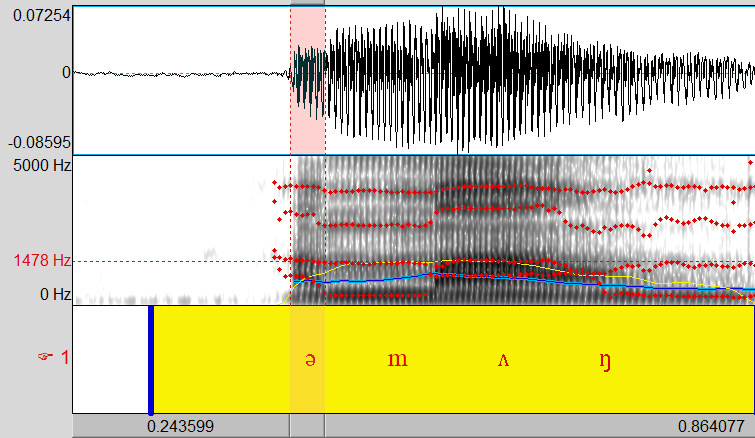
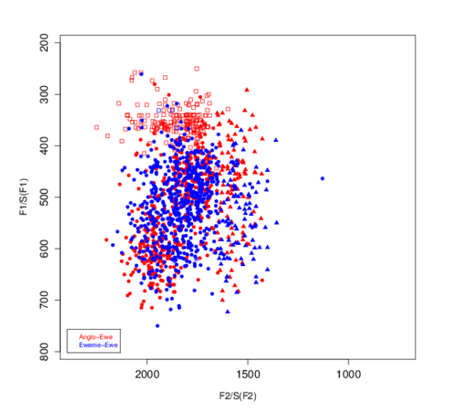
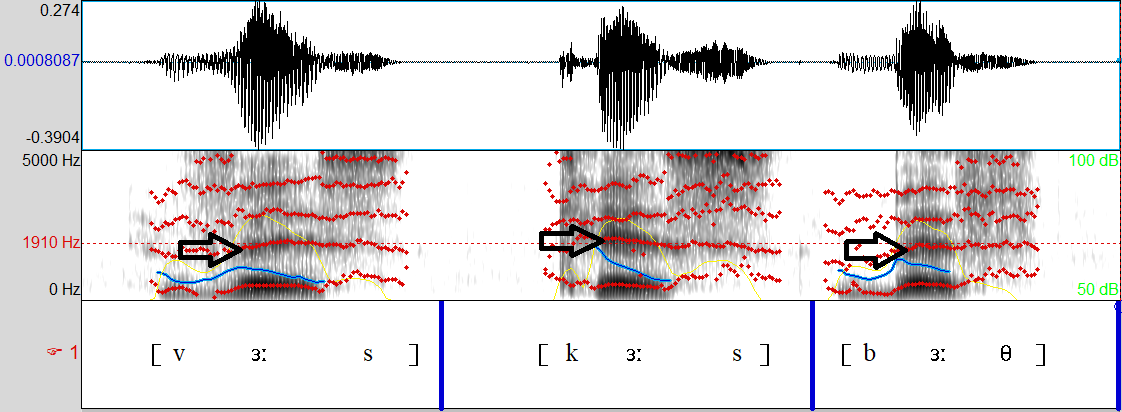
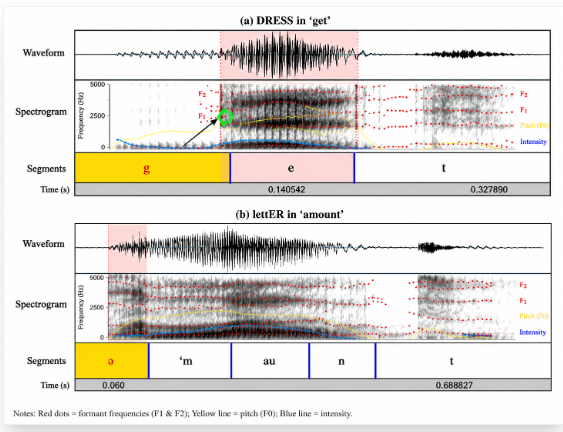
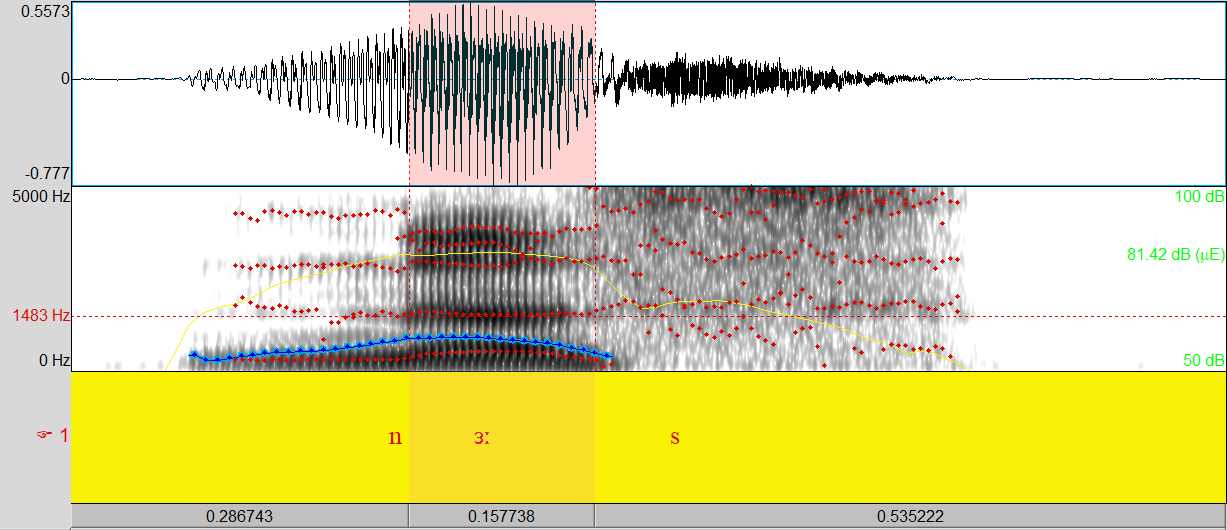
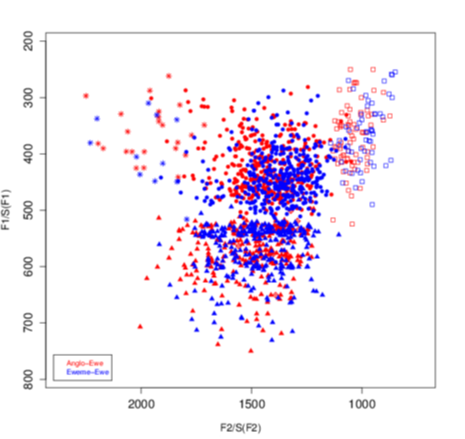
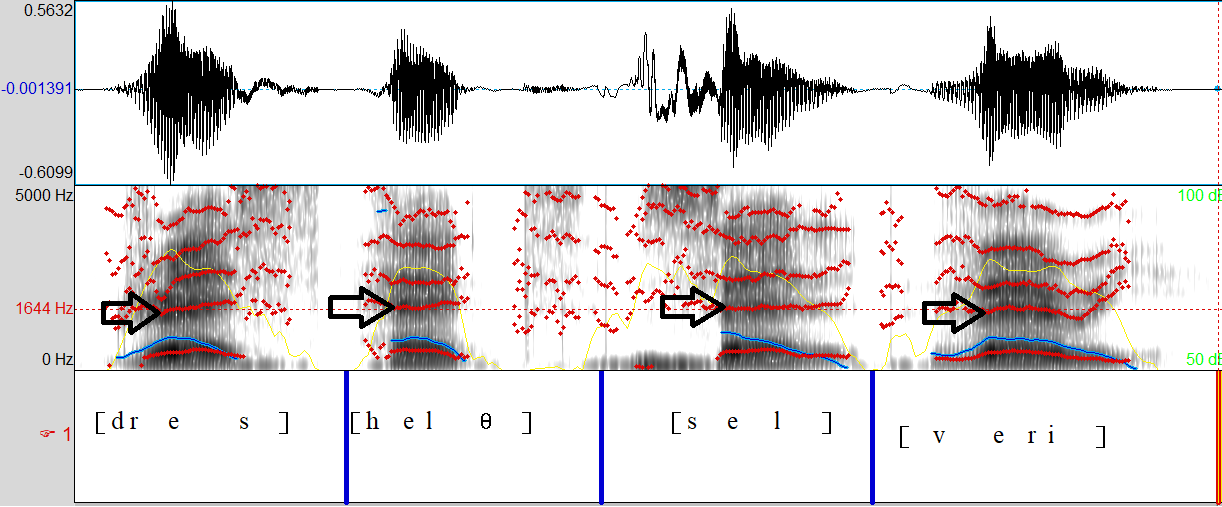
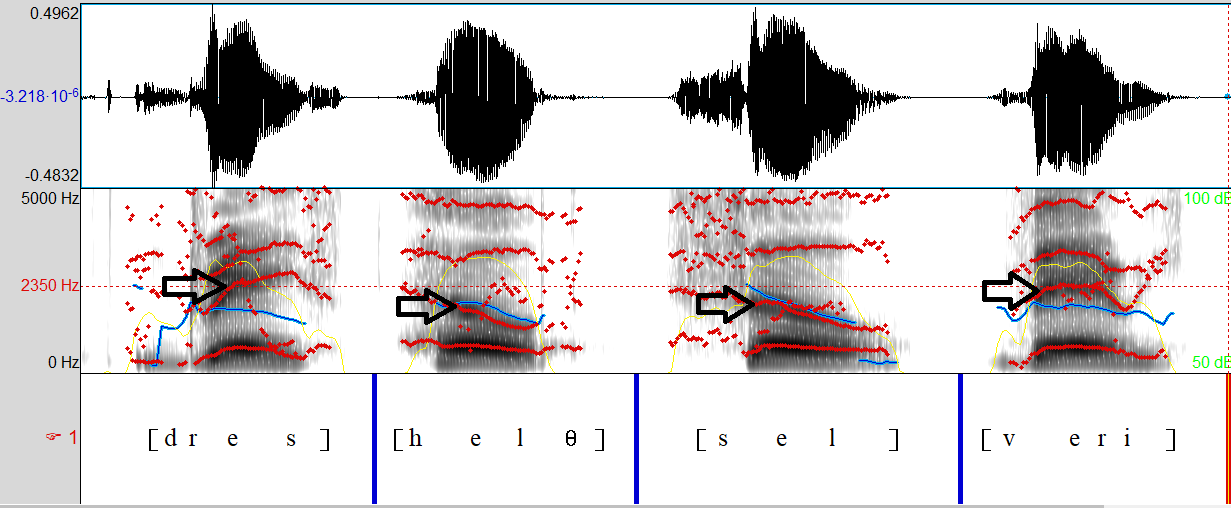
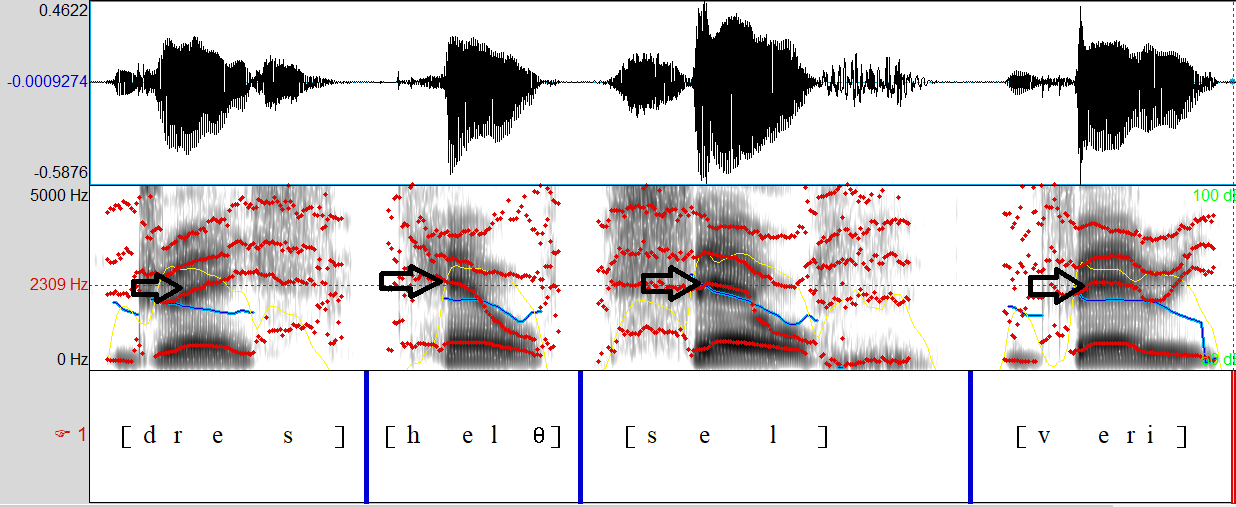
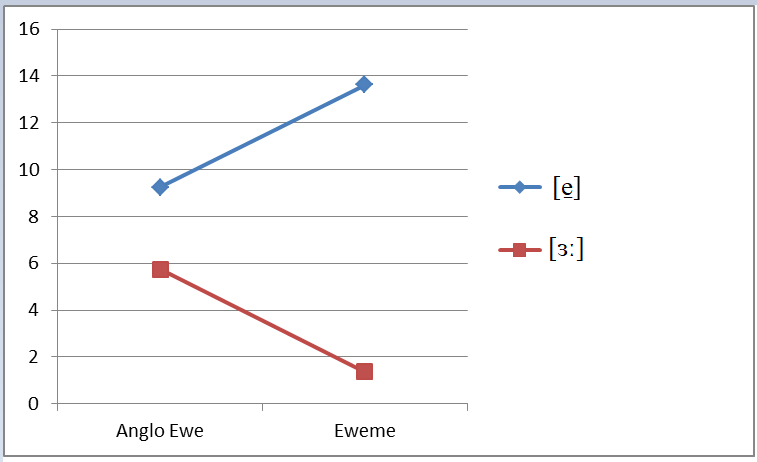
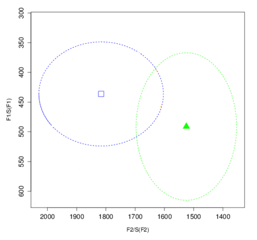
This paper investigates how dialectal variation in Eʋe—specifically the Eʋeme and Aŋlɔ varieties—shapes the pronunciation of three English lexical sets: NURSE, DRESS, and lettER. Using a variationist framework, the study analyses vowel quality, duration, and pitch from controlled word-list readings (fifteen items per lexical set) produced by Eʋe-speaking English users in Ghana. Acoustic measurements of the recorded samples were complemented by statistical testing to quantify patterns of variation. Results reveal substantial variability across all three sets, with the lettER set showing the greatest degree of alternation. Tokens in lettER were realised variously as [ɪ], [ʌ], [o], and [ə]; these alternations showed little systematic dialectal conditioning except for the occurrence of [o]. The DRESS set displayed moderate, dialect-linked variation, with three primary realisations—[ɪ], [e̠], and [ɜː]. While Aŋlɔ speakers produced all three variants, Eʋeme speakers favoured [e̠] and [ɜː]. The NURSE exhibited the least variation, chiefly alternating between [e̠ː] and [ɜː], with Eʋeme speakers predominantly using [e̠ː] and Aŋlɔ speakers using both [e̠ː] and [ɜː]. These patterns are interpreted as evidence of emerging local and non-local varieties within Eʋe English: a local accent diverging from Received Pronunciation (RP) and a non-local form approximating RP quality. Instances such as the fronting of NURSE toward /e/ in some speakers versus RP-like [ɜː] in others, and the mixture of RP-like and alternative realisations in DRESS, support this two-variety account. The alternation between full vowels ([ɪ], [o], [ʌ]) and reduced [ə] in lettER further illustrates this split. Phonological characteristics of Eʋe—comparable mid vowels, preference for open syllables, limited vowel reduction, and deletion of post-vocalic /r/—help explain the observed substitutions and near-target realisations with slight raising or centralization. While dialect geography is a significant predictor of vowel realisation, phonological conditioning and individual speaker idiosyncrasy also contribute. The study underscores the systematic nature of cross-linguistic transfer and the necessity of accounting for dialect background in pronunciation teaching, intelligibility assessment, and research on vowel systems and sound change among Eʋe-speaking learners of English.
 BRJ now supports Model Context Protocol
 ChatGPT
 Claude
 Gemini
Research ID
Universal Unique Research ID
Citation Generator
Cite This Research Manuscript
Awoonor, L. (2026). Dialect Diversity in Eve and Its Impact on the Lexical Sets: Nurse, Dress and Letter. Boston Research Journal of Social Sciences & Humanities, 6(3), 5-25. https://bostonresearch.org/scholarly-article/dialect-diversity-in-eve-and-its-impact-on-the-lexical-sets-nurse-dress-and-letter/
Figures
References
Ansre, G. (1961). The tonal structure of Eʋe. Hartford Seminary Foundation.
Ansre, G. (2000). The Eʋe language. In K. Gavua (Ed.), A handbook of Eʋeland: Vol. 2. The Northern Eʋe in Ghana (pp. 22–47). Woeli Publishing Services.
Atakpa, F. K. (1997). The naming system of the Eʋe. In F. Agbodeka (Ed.), A handbook of Eʋe: Vol. 1. The Eʋe of Southern Ghana (pp. 177–192). Woeli Publishing Services.
Awoonor-Aziaku, L. (2015). The effect of Englishisation on language use among the Eʋe of Southern Volta in Ghana. International Journal of English Language and Literature Studies, 4(4), 192–202.
Awoonor-Aziaku, L. (2018). Variation study of the Received Pronunciation (RP) vowel phonemes /e/, /ɜː/ and /ə/ among Eʋe speakers of English in Ghana. Universitätsbibliothek Johann Christian Senckenberg.
Bertho, J. (1946). Adja-Tado, races et langues du Bas-Dahomey et du Bas-Togo. Grands Lacs, 61, 57–59.
Bladon, R. A. W., & Al-Bamerni, A. (1976). Coarticulation resistance in English /l/. Journal of Phonetics, 4(2), 137–150.
Boersma, P. (2001). Praat, a system for doing phonetics by computer. Glot International, 5(9–10), 341–345.
Capo, H. B. C. (1991). A comparative phonology of Gbe. Foris.
Chambers, J. K., & Trudgill, P. (1998). Dialectology (2nd ed.). Cambridge University Press.
Cruttenden, A. (2001). Gimson’s pronunciation of English (6th ed.). Edward Arnold.
Dakubu, M. E. K. (1977). The contribution of linguistics to the study of Ghanaian history. In J. O. Hunwick (Ed.), Proceedings of the seminar on Ghanaian historiography and historical research, 20th–22nd May 1976 (pp. 26–43). Department of History, University of Ghana.
de Medeiros, F. (Ed.). (1984). Peuples du Golfe du Bénin: Aja-Ewe (Colloque de Cotonou). Karthala.
Delattre, P. (1965). Comparing the phonetic features of English, French, German and Spanish: An interim report. Julius Groos.
Ellis, A. B. (1890). The Ewe-speaking peoples of the Slave Coast of West Africa: The religion, manners, customs, laws and languages. Chapman and Hall.
Gavua, K. (Ed.). (2000). A handbook of Eʋeland: Vol. 2. The Northern Eʋe in Ghana. Woeli Publishing Services.
Greenberg, J. H. (1963). The languages of Africa. Indiana University Press.
Harrington, J., Palethorpe, S., & Watson, C. (2000). Monophthongal vowel changes in Received Pronunciation: An acoustic analysis of the Queen’s Christmas broadcasts. Journal of the International Phonetic Association, 30(1-2), 63–78.
Hawkins, S., & Midgley, J. (2005). Formant frequencies of RP monophthongs in four age groups of speakers. Journal of the International Phonetic Association, 35(2), 183–199.
Kachru, B. B., Kachru, Y., & Nelson, C. L. (Eds.). (2006). The handbook of World Englishes. Blackwell.
Kendall, T., & Thomas, E. R. (2010). Vowels: Vowel manipulation, normalization, and plotting in R (Version 1.1) [Computer software].
Ladefoged, P. (1993). A course in phonetics (3rd ed.). Harcourt Brace College Publishers.
Lass, R. (2006). Phonology and morphology. In R. Hogg & D. Denison (Eds.), A history of the English language (pp. 43–108). Cambridge University Press.
Lindblom, B. (1963). Spectrographic study of vowel reduction. Journal of the Acoustical Society of America, 35(11), 1773–1781.
Maclagan, M. A., Gordon, E., & Lewis, G. (1999). Women and sound change: Conservative and innovative behavior by the same speakers. Language Variation and Change, 11(1), 19–41.
Maclagan, M., & Hay, J. (2004). The rise and rise of New Zealand English DRESS. In Proceedings of the 10th Australian International Conference on Speech Science and Technology (pp. 183–188). Australian Speech Science and Technology Association.
Pazzi, R. (1979). Introduction à l’histoire de l’aire culturelle Ajatado. Institut National des Sciences de l’Éducation, Université du Bénin.
Sackeyfio, N. A. (1996). Let’s teach English. Assemblies of God Literature Centre.
Schmied, J. (2009). East African English: Kenya, Uganda, Tanzania. John Benjamins.
Schneider, E. W. (2007). Postcolonial English: Varieties around the world. Cambridge University Press.
Trudgill, P. (1999). The dialects of England (2nd ed.). Blackwell.
Tunley, A. (1999). Coarticulatory influences of liquids on vowels in English [Doctoral dissertation, University of Cambridge].
Watt, D. J. L., & Fabricius, A. H. (2002). Evaluation of a technique for improving the mapping of multiple speakers’ vowel spaces in the F1–F2 plane. Leeds Working Papers in Linguistics and Phonetics, 9, 159–173.
Wells, J. C. (1982). Accents of English. Cambridge University Press.
Westermann, D. (1930). A study of the Eʋe language (B. Smith, Trans.). Oxford University Press.
Copyright
© 2026 Awoonor. This is an open-access article distributed under the terms of the Creative Commons Attribution License (CC BY 4.0). The use, distribution or reproduction in other forums is permitted, provided the original author(s) or licensor are credited and that the original publication in this journal is cited, in accordance with accepted academic practice. No use, distribution or reproduction is permitted which does not comply with these terms.
Journal compilation © 2026 Boston Research Journals.
*Correspondence: Dr. Lena Awoonor
Disclaimer
All claims expressed in this article are solely those of the authors and do not necessarily represent those of their affiliated organizations, or those of the publisher, the editors and the reviewers. Any product that may be evaluated in this article or claim that may be made by its manufacturer is not guaranteed or endorsed by the publisher.