

Pedagogical Practice as the Basic Nucleus of Research, Innovation and Professional Skills
Lucas Palacios Liberato.
Listen to the introduction
Abstract
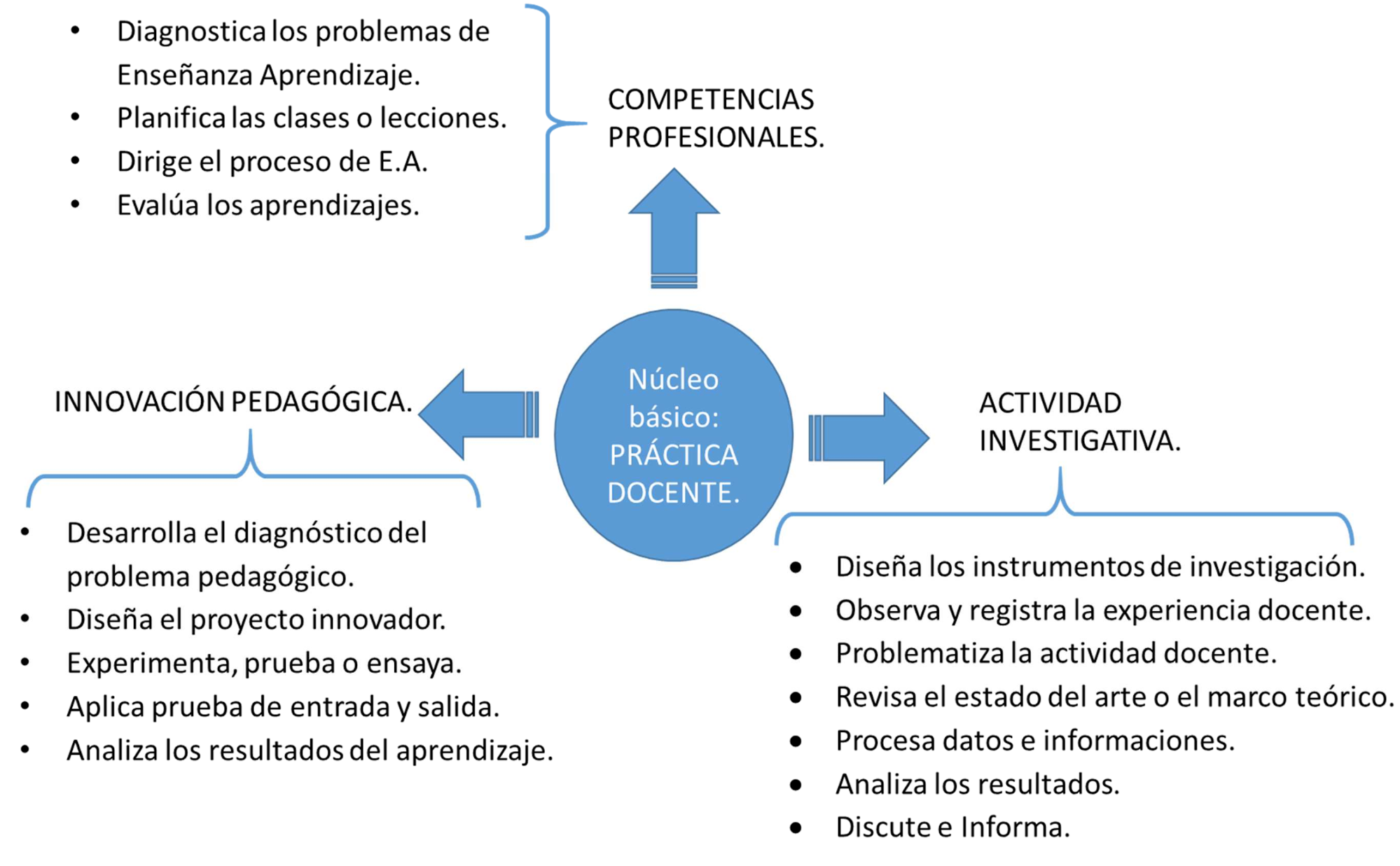
This paper describes and illustrates the singular phenomenon of pedagogical practice as a basic nucleus in the development of research, innovation and professional competences, insofar as these aspects are articulated and integrated in a single process. Thus, pedagogical activity becomes the object of research as a real and concrete phenomenon, if only if the teacher develops a pedagogical innovation, and this as the object of scientific experimentation; then, teaching practice as an exercise, preparation or training ensures the development of professional competences, in the diagnosis, planning, management and evaluation of learning. This means that the strategies, methods and/or techniques of the teaching activity become the techniques and instruments of research, and likewise the class, the lesson or the pedagogical activity becomes a laboratory of experimentation, where innovation is tested or tried out. All of this is systematised in the present experience.
 BRJ now supports Model Context Protocol
 ChatGPT
 Claude
 Gemini
Research ID
Universal Unique Research ID
Citation Generator
Cite This Research Manuscript
Liberato., L. P. (2024). Pedagogical Practice as the Basic Nucleus of Research, Innovation and Professional Skills. Boston Research Journal of Social Sciences & Humanities, 4(2), 15-31. https://doi.org/10.63942/brjssh.v4.i2.p15.25844
Figures
References
Delors, J. (1996). *La educación encierra un tesoro* [Education contains a treasure]. Santillana Ediciones UNESCO.
Elliott, J. (2010). El “estudio de la enseñanza y del aprendizaje”: Una forma globalizadora de investigación del profesorado [The "study of teaching and learning": A globalizing form of teacher research]. *Revista Interuniversitaria de Formación del Profesorado*, *68*(24, 2), 223–242.
Encinas, J. (1986). *Un ensayo de escuela nueva en el Perú* [An essay on a new school in Peru] (Edición Facsimilar). Imprenta Minerva.
Freire, P. (2004). *Pedagogía de la autonomía* [Pedagogy of autonomy]. Editorial Paz y Tierra.
Goodman, P. (1973). *La des-educación obligatoria* [Compulsory miseducation]. Editorial Fontanella.
Palacios, L. (2008). *Lógica de la ciencia e investigación educativa* [Logic of science and educational research]. Fondo Editorial del Pedagógico de San Marcos.
Palacios, L. (2016). Experiencia y percepciones de los estudiantes acerca de las prácticas pre profesionales en la UNAE [Students' experience and perceptions about pre-professional practices at UNAE]. *Revista OrientAcción*, (2).
Palacios, L. (2018). *Desarrollo de las competencias por el sistema de tareas* [Development of competencies by the task system]. Fondo Editorial de la UCH.
Palacios, L. (2019). Estructura y contenido de las prácticas preprofesionales en el modelo pedagógico de la Universidad Nacional de Educación (Ecuador) [Structure and content of pre-professional practices in the pedagogical model of the National University of Education (Ecuador)]. *Pedagogía y Saberes*, (50), 209–224. [https://doi.org/10.17227/pys.2019.50.9](https://www.google.com/search?q=https://doi.org/10.17227/pys.2019.50.9)
Palacios, L. (2020). Sobre o “Projeto Integrador do conhecimento” no modelo UNAE [About the “Knowledge Integrator Project” in the UNAE model]. In T. Fontaines-Ruiz, J. Pirela Morillo, J. Maza-Cordova, & Y. Almarza Franco (Eds.), *Convergencias y divergencias en investigación* (pp. 264–272). RISEI.
Peñaloza, W. (1989). *La Cantuta. Una experiencia en educación* [La Cantuta. An experience in education]. CONCYTEC.
Pérez, A. (2015, October 21). *Conversación desarrolladas en la UNAE* [Conversation held at UNAE] [Speech transcription]. Universidad Nacional de Educación, Azogues, Ecuador.
Perrenoud, P. (2004). *Diez nuevas competencias para enseñar* [Ten new competencies for teaching]. Graó.
Stenhouse, L. (2004). *La investigación como base de la enseñanza* [Research as a basis for teaching] (5th ed.). Ediciones Morata.
Vygotsky, L. S. (1979). *El desarrollo de los procesos psicológicos superiores* [The development of higher psychological processes]. Crítica.
Copyright
© 2024 Liberato.. This is an open-access article distributed under the terms of the Creative Commons Attribution License (CC BY 4.0). The use, distribution or reproduction in other forums is permitted, provided the original author(s) or licensor are credited and that the original publication in this journal is cited, in accordance with accepted academic practice. No use, distribution or reproduction is permitted which does not comply with these terms.
Journal compilation © 2026 Boston Research Journals.
*Correspondence: Lucas Palacios Liberato.
Disclaimer
All claims expressed in this article are solely those of the authors and do not necessarily represent those of their affiliated organizations, or those of the publisher, the editors and the reviewers. Any product that may be evaluated in this article or claim that may be made by its manufacturer is not guaranteed or endorsed by the publisher.